
Another method to maintain anonymity while browsing online is to avoid acquiring a domain. Essentially, by choosing a foreign server for your website’s hosting, you are participating in offshore hosting. Offshore web hosting can be described as utilizing servers situated outside the country where you presently reside to host a website. A guarantee of 99.9% uptime (quick loading speeds), and robust security measures are provided by the hosting provider, ensuring that your website remains safe from malicious hackers. Moreover, the migration plugin offered by DreamHost allows for a smooth transfer of your site to any other platform.
User profiles are created through necessary technical storage or access to enable advertising, or to track users on a website or across multiple sites for similar marketing goals.
For instance (the platform boasts a 99.9% uptime), indicating that your site will always remain online! By choosing this exceptional hosting provider — you are ensuring privacy for your domain, performance, and scalability. Consequently, I opted to add this platform to the list as well. Anonymous speech differentiates itself from tools like Hotmail and Sharpmail by anonymizing your IP — applying SSL encryption, and offering legal protection insurance. To begin with (Anonymous speech accepts Bitcoin payments), guarantees anonymity, and features constantly shifting servers for optimal security. Additionally (by selecting this hosting service), you are not only securing top performance but also gaining full control and management.
Furthermore (several alternative options are available on the market), catering to different budgets and specific technical needs, ensuring a solution that fits your project requirements perfectly. The platform’s dedication to innovative technology further solidifies its status as a reliable partner in the digital realm. Included in this are Tor relays (websites for online gambling and betting), pharmaceutical sites, copyrighted content, and similar services. The standard Acceptable Use Policy (AUP) forbids illegal pornography, carding, hacking, phishing sites, and the sale of weapons and drugs, among other things. Panama has now become the online version of a Swiss bank! While there is a list of restrictions (it consists mainly of typical issues such as hacking), illegal pornography, and viruses.

Which is the best anonymous hosting provider?
Beyond that, HostGator enjoys popularity for its budget-friendly solutions and rapid hosting speeds. Thus (it can be confidently stated that your customers will find it incredibly easy to achieve maximum performance from your site), regardless of their location worldwide. Unlike the other hosting providers mentioned here (this one also guarantees 99.99% uptime), exceptional speed, and reliability. Additionally (they possess their own cache manager), which facilitates your website’s swift loading time.
Uptime and Reliability
Its Shared Unlimited plan — which costs $3.95 per month, allows you to host an unlimited number of websites. Enter a fake address or even a name buy anonymous hosting , and you’re all set. DreamHost is another anonymous web hosting service that we gladly recommend. Finally, Hostinger is the most affordable anonymous web hosting.
Designed for optimal reliability and performance, the platform employs high-quality infrastructure to manage high volumes of traffic and challenging workloads. A responsive and quick live chat service is accessible 24/7 to address most server-related and non-server-related issues on the platform. You are not obligated to disclose your complete name, address, or any other identification! Undoubtedly, BitLaunch stands out as the leading provider of anonymous VPS hosting. With 24/7 live chat support (complimentary website migration), and affordable plans that come with a 30-day money-back guarantee, it is an excellent option for those prioritizing privacy and performance.
To get started (consider exploring the anonymous VPS hosting options available on HostSailor), a trusted provider known for its commitment to privacy and security. When it comes to security, anonymous VPS hosting services often offer extra protection, such as DDoS protection and encrypted connections. Reputable anonymous VPS hosting companies have a rigorous no-logs policy, which means they don’t maintain any records of what you do on their servers. Unlike standard hosting services (which often demand extensive personal details during registration), anonymous VPS hosting aims to limit the information you need to provide. This article will explore the concept of anonymous VPS hosting (its growing appeal), and how you may use it while keeping your personal data under wraps. We accept a variety of payment methods to ensure your convenience.
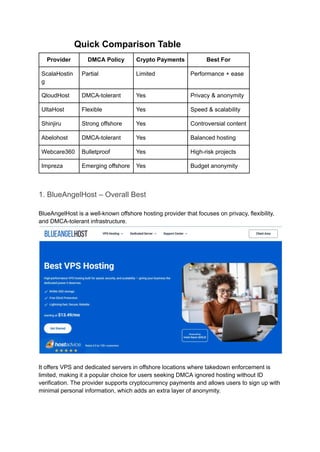
What are the Best Anonymous Hosting Providers?
Start with a small monthly plan — test speed and uptime, and only scale up once you are confident the provider matches both your anonymity requirements and technical needs. The best anonymous VPS hosting provider depends on how much privacy you need — where you want your server hosted, and how much convenience you are willing to trade for data minimization. Not necessarily — but performance varies widely by provider, data center, virtualization type, and network quality. Read the terms before ordering (especially if you plan to run Tor relays), VPN services, scraping tools, or high-traffic public applications. Some hosts accept stablecoins (Litecoin), or prepaid vouchers, which may be convenient but not equally private. Treat anonymous VPS hosting as one layer in a broader privacy model rather than a complete shield.
Powered by AMD EPYC processors and SuperMicro systems, it offers a native-like macOS experience. From custom kernel extensions to intricate software tools, you enjoy complete flexibility to optimize performance and manage your virtual hardware as if it were directly on your desk. Featuring NVMe storage for fast response times and expert 24/7 management, our platform delivers a cutting-edge macOS environment with the security and bandwidth your projects require. In free hosting, providers earn revenue through advertisements on their hosted sites; conversely, in offshore hosting, providers avoid placing advertisements to ensure a high level of data protection.
